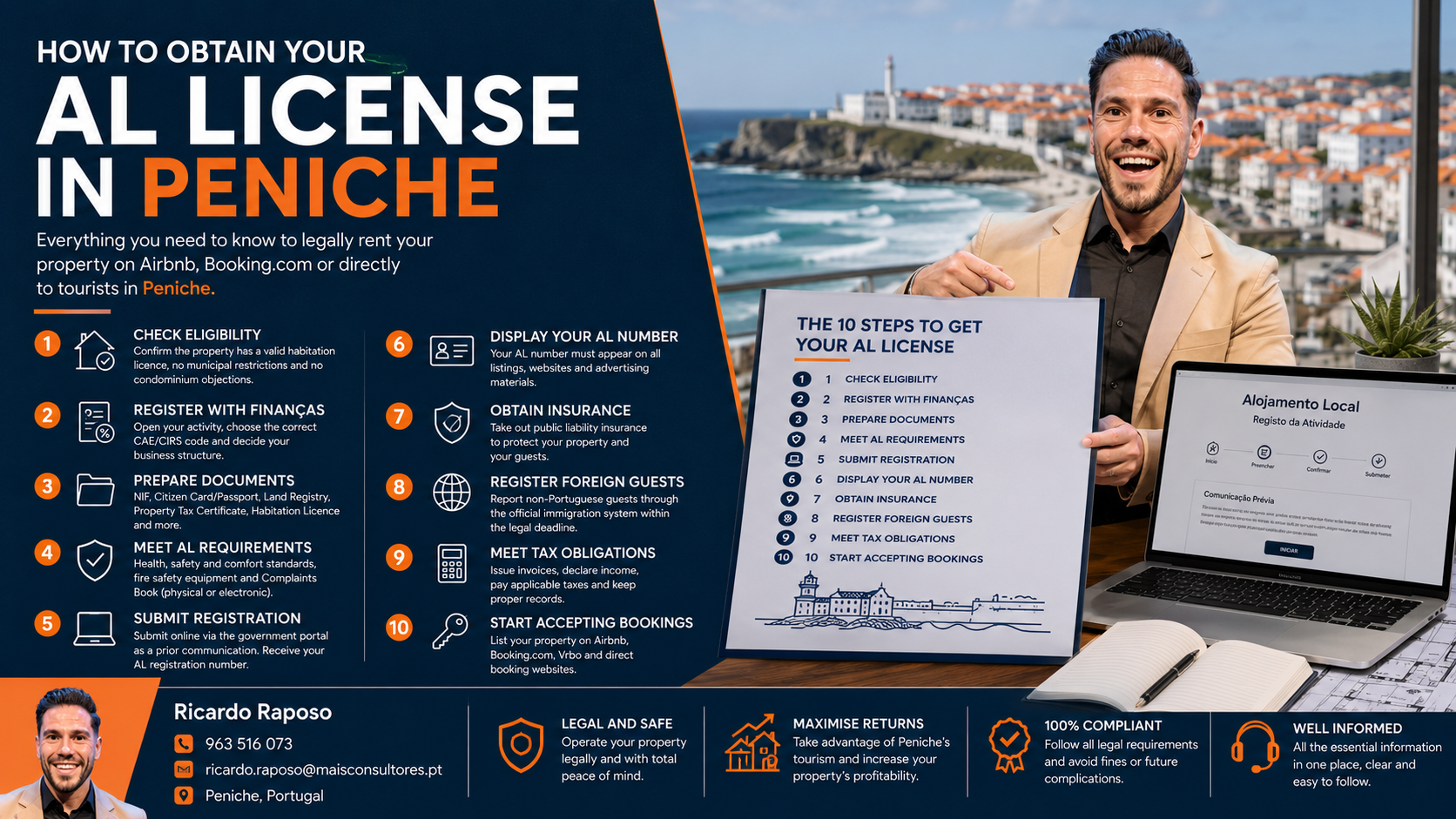
How to Obtain an Alojamento Local (AL) Licence in Peniche: A Complete Guide for Property Owners
Portugal remains one of Europe's most attractive destinations for short-term holiday rentals, and Peniche is no exception. With its world-famous surfing beaches, stunning coastline, and growing tourism industry, many property owners are looking to generate income through platforms such as Airbnb, Booking.com, Vrbo, and direct bookings.
Before welcoming your first guests, however, it is essential to ensure your property complies with Portuguese legislation and is properly registered as an Alojamento Local (AL).
This guide explains everything you need to know about obtaining an AL licence in Peniche.
1. Confirm Your Property Is Eligible
Before starting the registration process, make sure your property meets the legal requirements.
You should verify that:
The property has a valid Habitation Licence (Licença de Utilização), or is legally exempt where applicable.
There are no municipal restrictions preventing a new AL registration.
If the property is part of a condominium, check whether there are any building regulations or restrictions that may affect short-term rentals.
Recent legislative changes have given Portuguese municipalities greater authority to regulate new Alojamento Local registrations, making it advisable to verify the property's eligibility before proceeding.
2. Register Your Business with the Portuguese Tax Authority
To legally operate an Alojamento Local, you must register your activity with the Portuguese Tax Authority (Finanças).
This includes:
Opening your tax activity (Início de Atividade).
Selecting the appropriate business activity code (CAE/CIRS) for Local Accommodation.
Deciding whether to operate as an individual or through a company.
Many property owners choose to work with a certified accountant to ensure the most suitable tax structure.
3. Prepare the Required Documentation
Before submitting your application, gather the necessary documents.
These typically include:
Citizen Card or Passport
Portuguese Tax Number (NIF)
Land Registry Certificate (Certidão Permanente)
Property Tax Certificate (Caderneta Predial)
Habitation Licence (where required)
Identification of the property owner
Declaration confirming the property complies with all legal requirements
Depending on the property's characteristics, additional documentation may be requested.
4. Ensure the Property Meets AL Requirements
Your accommodation must comply with Portuguese health and safety regulations.
Generally, the property must provide:
Hot and cold running water
Adequate ventilation
Natural light
Furniture and equipment in good condition
First aid kit
Fire extinguisher
Fire blanket
Emergency contact information displayed
Complaints Book (Livro de Reclamações), either physical or electronic where applicable
The property must also comply with all applicable fire safety regulations.
5. Submit Your Alojamento Local Registration
Applications are submitted online through the Portuguese Government portal using the "Prior Communication" (Comunicação Prévia) procedure.
Once submitted, you'll receive an AL registration number, allowing you to begin operating unless the municipality objects within the legal timeframe (generally 10 working days, or 20 days for hostels).
6. Display Your AL Registration Number
Once your registration becomes active, your AL number must appear on all promotional material, including:
Airbnb listings
Booking.com listings
Vrbo listings
Your own website
Social media and other advertising
Operating or advertising without a valid registration number may result in penalties.
7. Obtain Public Liability Insurance
Public liability insurance is an essential part of operating a responsible Alojamento Local.
Besides protecting both guests and property owners, proof of insurance is required under the current legal framework for AL establishments.
8. Register Foreign Guests
If you host non-Portuguese guests, you are legally required to report their stay through Portugal's official immigration reporting system within the applicable deadlines.
This is a standard obligation for all registered Alojamento Local operators.
9. Meet Your Tax Obligations
Operating an AL also involves ongoing tax responsibilities.
These include:
Issuing invoices or receipts
Declaring rental income
Paying applicable taxes
Maintaining accounting records where required
Remaining compliant with Portuguese tax regulations ensures your business operates smoothly and avoids unnecessary penalties.
10. Start Accepting Bookings
Once your registration is active and all legal requirements have been fulfilled, you're ready to advertise your property on major booking platforms such as Airbnb, Booking.com, Vrbo, or through your own direct booking website.
Professional photography, attractive property descriptions, competitive pricing, and excellent guest communication can significantly improve occupancy rates and maximise your rental income.
Final Thoughts
Peniche continues to establish itself as one of Portugal's leading coastal destinations, offering excellent opportunities for property owners interested in short-term rentals.
Obtaining an Alojamento Local licence is a straightforward process when approached correctly. Ensuring full legal compliance from the outset provides peace of mind, builds trust with guests, and protects your investment.
If you're considering registering your property as an Alojamento Local in Peniche and would like professional guidance throughout the process, expert support can help simplify every step and ensure everything is handled correctly.
Need help obtaining your Alojamento Local Licence?
Ricardo Raposo
Real Estate Consultant — MaisConsultores TEAM
📍 Peniche, Portugal
📱 +351 963 516 073
✉️ ricardo.raposo@maisconsultores.pt
🏢 AMI: 23990
👉 Feel free to get in touch for professional advice and personalised assistance.